Showing posts with label Event. Show all posts

The Wedding of Prince William of Wales and Catherine Middleton

http://www.google.co.uk/logos/2011/royalwedding11-hp.png
http://s.ytimg.com/yt/img/doodles/royal_wedding-vflZ8V2om.png

The wedding of Prince William, Duke of Cambridge and Catherine "Kate" Middleton took place at Westminster Abbey on Friday, 29 April 2011 at 11:00 am BST (UTC+1). Prince William, who is second in the British line of Succesion to Queen Elizabeth II, first met Middleton in 2001, while both were students at the University of St Andrews. Their engagement, which began on 20 October 2010, was announced on 16 November 2010.

Following the wedding, the couple intend to continue residing on the Isle of Anglesey in North Wales, where Prince William is based as an RAF Search and Rescue pilot.

XIII Culture Week

Source: http://www.google.it/logos/2011/italyculture11-hp.png

55 years of the first lady of civil rights - Rosa Parks

Source: http://www.google.com/logos/2010/rosaparks10-instant.jpg
Rosa Louise McCauley Parks (February 4, 1913 – October 24, 2005) was an African American civil rights activist, whom the U.S. Congress later called "the first lady of civil rights", and "the mother of the freedom movement".

December 1, 1955, Rosa refused
to move to the back of the bus.
On December 1, 1955 in Montgomery, Alabama, Parks, age 42, refused to obey bus driver James Blake's order that she give up her seat to make room for a white passenger. Her action was not the first of its kind. Irene Morgan in 1946, and Sarah Louise Keys in 1955, had won rulings before the U.S. Supreme Court, and the Interstate Commerce Commission, respectively, in the area of interstate bus travel. Nine months before Parks refused to give up her seat, 15-year-old Claudette Colvin refused to move from her seat on the same bus system. In New York City, in 1854, Lizzie Jennings engaged in similar activity, leading to the desegregation of the horsecars and horse-drawn omnibuses of that city. But unlike these previous individual actions of civil disobedience, Parks' action sparked the Montgomery Bus Boycott.

Parks' act of defiance became an important symbol of the modern Civil Rights Movement and Parks became an international icon of resistance to racial segregation. She organized and collaborated with civil rights leaders, including boycott leader Martin Luther King, Jr., helping to launch him to national prominence in the civil rights movement.

At the time of her action, Parks was secretary of the Montgomery chapter of the National Association for the Advancement of Colored People (NAACP) and had recently attended the Highlander Folk School, a Tennessee center for workers' rights and racial equality. Nonetheless, she took her action as a private citizen "tired of giving in". Although widely honored in later years for her action, she suffered for it, losing her job as a seamstress in a local department store. Eventually, she moved to Detroit, Michigan, where she found similar work. From 1965 to 1988 she served as secretary and receptionist to African-American U.S. Representative John Conyers. After retirement from this position, she wrote an autobiography and lived a largely private life in Detroit. In her final years she suffered from dementia and became embroiled in a lawsuit filed on her behalf against American hip-hop duo OutKast.

Parks eventually received many honors ranging from the 1979 Spingarn Medal to the Presidential Medal of Freedom, the Congressional Gold Medal and a posthumous statue in the United States Capitol's National Statuary Hall. Her death in 2005 was a major story in the United States' leading newspapers. She was granted the posthumous honor of lying in honor at the Capitol Rotunda.

2500 years from the first Marathon

Source: http://www.google.com/logos/2010/marathon10-hpc.jpg
The marathon is a long-distance running event with an official distance of 42.195 kilometres (26 miles and 385 yards), that is usually run as a road race. The event was instituted in commemoration of the fabled run of the Greek soldier Pheidippides, a messenger from the Battle of Marathon (the namesake of the race) to Athens.

The marathon was one of the original modern Olympic events in 1896, though the distance did not become standardized until 1921. More than 500 marathons are contested throughout the world each year, with the vast majority of competitors being recreational athletes. Larger marathons can have tens of thousands of participants.

The name Marathon comes from the legend of Pheidippides, a Greek messenger. The legend states that he was sent from the battlefield of Marathon to Athens to announce that the Persians had been defeated in the Battle of Marathon (in which he had just fought), which took place in August or September, 490 BC. It is said that he ran the entire distance without stopping and burst into the assembly, exclaiming "Νενικήκαμεν" (Nenikékamen, 'We have won.') before collapsing and dying. The account of the run from Marathon to Athens first appears in Plutarch's On the Glory of Athens in the 1st century AD which quotes from Heraclides Ponticus's lost work, giving the runner's name as either Thersipus of Erchius or Eucles. Lucian of Samosata (2nd century AD) also gives the story but names the runner Philippides (not Pheidippides). [Read more on Wikipedia]

1 billion subscriptions

It’s been a week of milestones for YouTube — first, Lady Gaga’s videos hit 1 billion views, then the Promoted Videos program hit half a billion views. Now, YouTube is reporting that it has seen 1 billion subscriptions. That’s a lot of billions in seven days.

According to the YouTube blog, the channel that raked in the billionth hit was MachinimaSports, and a ton of its channels have crossed the 1 million subscriber mark, including fred, failblog and universalmusicgroup.

In celebration of the site’s ever-burgeoning following, YouTube is also rolling out a widget that video-makers can embed in their sites, which will allow people to subscribe to channels even outside of the video-sharing site. The code for the widget can be found on YouTube’s blog.

Source: http://s.ytimg.com/yt/img/doodles/1_billion_yoodle-vflkif_nD.png

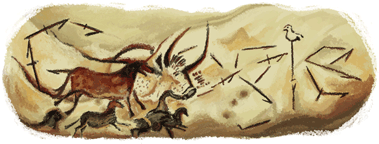
Discovery of Grotte de Lascaux

Source: http://www.google.com/logos/2010/grotte10-hp.gif
Lascaux Cave is one of the largest caves with Paleolithic by the number and the aesthetic quality of his works. It is sometimes nicknamed the "Sistine Chapel of cave art". The paintings and engravings it contains could not be precise dating direct: their age is estimated between about 18,000 and 17,000 years before present from dating and studies on objects discovered in the cave. According to the authors, they are attributed to the Magdalenian or former Solutrean that precedes it.

Life in a Day

Every day, 6.7 billion people view the world through their own unique lens. Imagine if there was a way to collect all of these perspectives, to aggregate and mold them into the cohesive story of a single day on earth.

Today, YouTube announced to launch of “Life in a Day,” a historic cinematic experiment that will attempt to do just that: document one day, as seen through the eyes of people around the world. On July 24, you have 24 hours to capture a snapshot of your life on camera. You can film the ordinary -- a sunrise, the commute to work, a neighborhood soccer match, or the extraordinary -- a baby’s first steps, your reaction to the passing of a loved one, or even a marriage.

Kevin Macdonald, the Oscar-winning director of films such as The Last King of Scotland, Touching the Void and One Day in September, will then edit the most compelling footage into a feature documentary film, to be executive produced by Ridley Scott, the director behind films like Gladiator, Black Hawk Down, Thelma & Louise, Blade Runner and Robin Hood. LG Electronics is supporting “Life in a Day” as a key part of its long-standing Life’s Good campaign and to support the creation of quality online content that can be shared and enjoyed by all.

The film will premiere at the 2011 Sundance Film Festival and if your footage makes it into the final cut, you’ll be credited as a co-director and may be one of 20 contributors selected to attend the premiere.


Want to take part? Here’s what to do.

1. Visit the “Life in a Day,” channel and learn more about the project. Be sure to read through the steps you need to take to participate and the guidelines for creating your video(s). Also check out some of the sample videos for inspirational ideas.

2. On July 24, capture your day on camera.

3. Upload your footage to the “Life in a Day,” channel any time before July 31.

Regardless of whether your footage makes it into the final film, your video(s) will live on on the “Life in a Day,” channel as a time capsule that will tell future generations what it was like to be alive on July 24, 2010.

Be a part of history.

Source: http://s.ytimg.com/yt/img/doodles/life_us_uk_3-vfl178000.png
Source: http://s.ytimg.com/yt/img/doodles/life_us_uk_2-vfl178000.png
Source: http://s.ytimg.com/yt/img/doodles/life_us_uk_1-vfl178000.png
Source: http://s.ytimg.com/yt/img/doodles/life_row_filming-vfl178000.png
Source: http://s.ytimg.com/yt/img/doodles/life_us_uk_filming-vfl178251.png

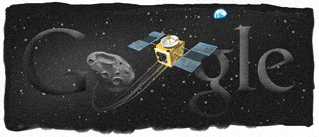
Asteroid Explorer Hayabusa Returns

Source: http://www.google.com/logos/hayabusa10-hp.gif
Hayabusa (はやぶさ?, literally "peregrine falcon") was an unmanned spacecraft developed by the Japan Aerospace Exploration Agency to return a sample of material from a small near-Earth asteroid named 25143 Itokawa to Earth for further analysis.

Hayabusa, formerly known as MUSES-C for Mu Space Engineering Spacecraft C, was launched on 9 May 2003 and rendezvoused with Itokawa in mid-September 2005. After arriving at Itokawa, Hayabusa studied the asteroid's shape, spin, topography, colour, composition, density, and history. In November 2005, it landed on the asteroid and attempted to collect samples but it is not clear whether the sampling mechanism worked as intended. Nevertheless, there is a high probability that some dust was trapped in the sampling chamber during contact with the asteroid, so the chamber was sealed, and the spacecraft returned to Earth on 13 June 2010.

The spacecraft also carried a detachable minilander, MINERVA, but this failed to reach the surface. [Read more on Wikipedia]

Argentina's Bicentennial Independence

The Argentina Bicentennial is a series of celebrations and observances celebrated on May 25, 2010, and throughout the year. They commemorated the 200th anniversary of the May Revolution, a sequence of historical events that led to the Viceroy Baltasar Hidalgo de Cisneros' being ousted from office and replaced with the Primera Junta, the first national government.

Bicentennial celebrations began on Friday, May 21, in Buenos Aires, with millions of people in attendance, making it the biggest outdoor festivities Argentina has seen since it celebrated its return to democratic rule after seven years of military dictatorship in 1983. [Read more on Wikipedia]

World Expo Opens in Shanghai

Source: http://www.google.com/logos/worldexpo10-hp.gif
The 2010 World Expo has opened in the city of Shanghai in what China hopes will be further proof of its rising global influence.

Almost 250 countries and international organisations are showcasing their culture in an event themed around sustainable development.

Many are doing so in pavilions with radical architecture.

World leaders, including France's President Sarkozy, are attending the lavish opening ceremony.

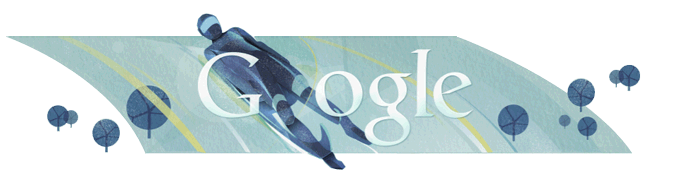
Google Pulls Olympic Luge Logo After Backlash

Google posted a Vancouver Winter Olympics-themed search page logo featuring a luge athlete this morning just one day after 21-year old Georgian luge competitor Nodar Kumaritashvili died while practicing on the world’s longest luge drop.

The logo was replaced with a similar one depicting a snowboarder instead of a luger. The New York Daily News managed to find a picture of the logo that was pulled; you can see both the new graphic and the original one below.

After Google posted the logo, many people called it poor taste on Twitter. User jennytondera tweeted, “google luge logo. really, google? not okay.” On the other hand, some other folks took it to be a fitting tribute.

Individual sensibilities differ regarding this, but Google apparently decided to play it safe by replacing the logo. What do you think — fitting tribute or bad taste? [via Mashable]

Original Logo: Luge - Source: http://www.google.com/logos/olympics10-luge-hp.png
New Logo: Snowboarding - Source: http://www.google.com/logos/olympics10-snowboarding-hp.png

Istanbul, Capital of Culture

Source: http://www.google.com/logos/istanbul10-hp.gif
Each year, cities chosen as European Capitals of Culture – in 2010 Essen, Istanbul and Pecs – provide living proof of the richness and diversity of European cultures. Started in 1985, the initiative has become one of the most prestigious and high-profile cultural events in Europe.

More than 40 cities have been designated European Capitals of Culture so far, from Stockholm to Genoa, Athens to Glasgow, and Cracow to Porto.

A city is not chosen as a European Capital of Culture solely for what it is, but mainly for what it plans to do for a year that has to be exceptional. Its programme for the year must meet some specific criteria.

Sapsan Train Opening

Source: http://www.google.com/logos/sapsan_09-hp.gif
EVS, aka Sapsan (Russian Сапсан, "Peregrine Falcon", known as Velaro RUS in Germany) is a 1,520 mm gauge high speed train in Russia. The design is part of the Siemens Velaro family.

The trains were expected to start regular service on the Moscow — Saint Petersburg High-Speed Line by November 2009 at a maximum speed of 250 km/h (an upgrade of the tracks for up to 330 km/h is planned). The service was launched on 18 December 2009; tickets went on sale on 23 November. [Read more on Wikipedia]

Perseid Meteor Shower

Source: http://www.google.com/logos/perseids09.gif
The Perseids (pronounced /ˈpɜrsiː.ɨdz/) is the name of a prolific meteor shower associated with the comet Swift-Tuttle. The Perseids are so-called because the point they appear to come from, called the radiant, lies in the constellation Perseus. The name derives in part from the word Perseides (Περσείδες), a term found in Greek mythology referring to the descendants of Perseus. The stream of debris is called the Perseid cloud and stretches along the orbit of the comet Swift-Tuttle. The cloud consists of particles ejected by the comet as it travels on its 130-year orbit. Most of the dust in the cloud today is around a thousand years old. However, there is also a relatively young filament of dust in the stream that was pulled off the comet in 1862. The rate of meteors originating from this filament is much higher than for the older part of the stream. [Read more on Wikipedia]