Showing posts with label El Salvador. Show all posts

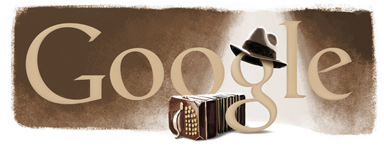
Carlos Gardel's Birthday

Source: http://www.google.com.ni/logos/2010/gardel10-hp.jpg
Carlos Gardel (11 December 1887 or 1890 – 24 June 1935) was a singer, songwriter and actor, and is perhaps the most prominent figure in the history of tango. His birthplace is disputed among Argentina, Uruguay and France. He lived in Argentina from the age of two and acquired Argentine citizenship in 1923. He grew up in the Abasto neighborhood of Buenos Aires. He attended Pio IX Industrial high-school located in the Almagro neighborhood of Buenos Aires. He died in an airplane crash at the height of his career, becoming an archetypal tragic hero mourned throughout Latin America. For many, Gardel embodies the soul of the tango style. He is commonly referred to as "Carlitos", "El Zorzal" (The Song Thrush), "The King of Tango", "El Mago" (The Magician) and "El Mudo" (The Mute).

The unerring musicality of Gardel's baritone voice and the dramatic phrasing of his lyrics made miniature masterpieces of his hundreds of three-minute tango recordings. Together with lyricist and long-time collaborator Alfredo Le Pera, Gardel wrote several classic tangos, most notably: Mi Buenos Aires querido, Cuesta abajo, Amores de estudiante, Soledad, Volver, Por una cabeza and El día que me quieras. [Read more on Wikipedia]

Carlos Gardel (1933)

El Salvador's Independence Day

Source: http://www.google.com/logos/2010/elsalvadorind10-hp.gif
The Spanish conquistadors led by Pedro de Alvarado and his brother Gonzalo arrived between 1524 and 1525 from the area comprising the present Republic of Guatemala after participating in the conquest of Mexico and crossed the Rio Paz (Peace River) into what is now the Republic of El Salvador. During colonial times, El Salvador was part of the General Captaincy of Guatemala, also known as the Kingdom of Guatemala. The Salvadoran territory was divided into the Mayor of Sonsonate and San Salvador, the latter being built as a Quartermaster in the late eighteenth century.

In 1811 and 1814 there were major uprisings against Spanish rule that expressed concern that the independence of the Creoles. Finally, the Central American nations won their independence from Spain on September 15, 1821. From January 5, 1822, the Central American provinces, except the opposition of the elite Salvadoran and Guatemalan intellectuals, joined the Mexican Empire, until March 19, 1823, when Agustín de Iturbide abdicates before Congress and he wrote a book that was secret.