Showing posts with label Festival. Show all posts

Festival Vallenato 2011

http://www.google.com.co/logos/2011/vallenato11-hp.jpg

The Vallenato Legend Festival (Spanish: Festival de la Leyenda Vallenata) is one of the most important musical festivals in Colombia. The Festival features a vallenato music contests for best interpreter of accordion, caja vallenata and guacharaca, as well as piqueria (battle of lyrics) and best song. It’s celebrated every year in April in the city of Valledupar, Department of Cesar.

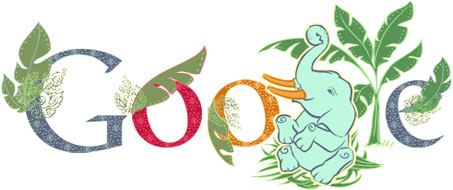
Songkran Festival 2011

http://www.google.co.th/logos/2011/songkran11-hp.jpg

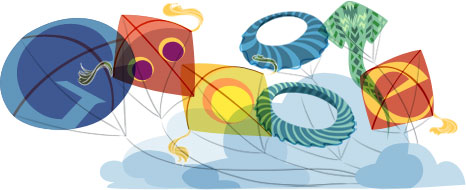
Holi Festival 2011

Source: http://www.google.co.in/logos/2011/holi11-hp.jpg

Oslo Ski VM 2011

Source: http://www.google.no/logos/2011/oslo11-hp.jpg
The FIS Nordic World Ski Championships 2011 will take place from 23 February to 6 March 2011 in Oslo, Norway, at the Holmenkollen National Arena. This is the fifth time these championships have been hosted in Holmenkollen, having been done previously in 1930, the 1952 Winter Olympics, 1966, and 1982. On 25 May 2006, the 45th FIS Congress in Vilamoura, Portugal selected the Holmenkollen area over both Val di Fiemme, Italy and Zakopane, Poland with a vote of 12 to 4 to 0. These games will coincide with the Holmenkollen Ski Festival as they have previously in 1930, 1952, 1966, and 1982. [Read more on Wikipedia]

Official logo for the FIS Nordic World Ski Championships 2011.

Double Ninth Festival

Source: http://www.google.com/logos/2010/doubleninth10-hp.gif
The Double Ninth Festival (Chinese: 重九; pinyin: Chóngjiǔ , also simplified Chinese: 重阳节; traditional Chinese: 重陽節; pinyin: Chóngyángjié or Chung Yeung Festival in Hong Kong, Vietnamese language: Tết Trùng Cửu), observed on the ninth day of the ninth month in the Chinese calendar, is a traditional Chinese holiday, mentioned in writing since before the East Han period (thus, before AD 25).

According to the I Ching, nine is the yang number; the ninth day of the ninth lunar month (or double nine) has too much yang (a traditional Chinese spiritual concept) and is thus a potentially dangerous date. Hence, the day is also called "Double Yang Festival" (重陽節). To protect against the danger, it is customary to climb a high mountain, drink chrysanthemum wine, and wear the zhuyu (茱萸) plant, Cornus officinalis. (Both chrysanthemum and zhuyu are considered to have cleansing qualities and are used on other occasions to air out houses and cure illnesses.) Also on this holiday, some Chinese also visit the graves of their ancestors to pay their respects. [Read more on Wikipedia]

Kicking off Oktoberfest on orkut

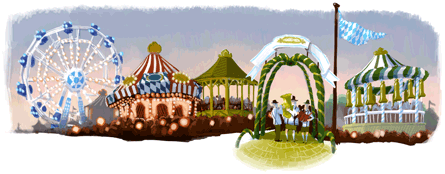
Today is the kick-off ceremony of Oktoberfest, a traditional German celebration of food, drink, music, dance, and culture that has become so popular that it has spread all around the world.

The world’s largest Oktoberfest celebration takes place in Munich, Germany during the last few weeks of September and beginning of October, and regularly commands millions of visitors.

Even if you’re not able to make it to Munich this year or participate in any of the local celebrations going on near you, Orkut wanted to offer you this special doodle to help you get into the spirit:

Source: https://static1.orkut.com/img/doodle/orkut_doodle_oktoberfest_a_v6.gif

Oktoberfest

Source: http://www.google.com/logos/2010/oktoberfest10-hp.gif

Raksha Bandhan

Raksha Bandhan (Hindi: रक्षाबंधन, Urdu: رکشا بندھن, the bond of protection), or Rakhi (राखी, راکھی), is a festival primarily observed in North India, which celebrates the relationship between brothers and sisters. The festival is observed by Hindus, Sikhs, and Muslims. The central ceremony involves the tying of a rakhi (sacred thread) by a sister on her brother's wrist. This symbolizes the sister's love and prayers for her brother's well-being, and the brother's lifelong vow to protect her. The festival falls on the full moon day (Shravan Poornima) of the Shravan month of the Hindu lunisolar calendar. [Read more on Wikipedia]
Source: https://static1.orkut.com/img/doodle/orkut_doodle_raksha_bandhan_a_v7.gif

orkut is celebrating the Tanabata Star Festival

The Tanabata Star Festival is an incredibly popular festival in Japan and this year it’s made its way to orkut as well. Although many celebrations now take place in July and early August, traditionally the festival has been celebrated on the 7th day of the 7th month of the lunar calendar year (which is actually today, August 16th).

During the festival, you can see colorful fabrics in the streets and large bamboo poles decorated with paper ornaments symbolizing the stars. Orkut team made their own ornament just for orkut and wanted to share it with you:

Source: https://static1.orkut.com/img/doodle/orkut_doodle_tanabata_star_festival_v2.gif

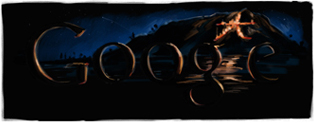
Gozan no Okuribi, iconic festivals of Kyoto

Source: http://www.google.com/logos/2010/kyotofestival2010-hp.jpg
Gozan no Okuribi (五山送り火), more commonly known as Daimonji (大文字), is one of the iconic festivals of Kyoto, Japan. It is the culmination of the O-Bon festival on August 16th, in which five giant bonfires are lit on mountains surrounding the city. It signifies the moment when the spirits of deceased family members, who are said to visit this world during O-Bon, are believed to be returning to the spirit world—thus the name Okuribi (送り火) (roughly, "send-off fire"). [Read more on Wikipedia]

Viljandi Folk Festival

If you happen to find yourself walking through Viljandi, Estonia, don't be surprised if you're overwhelmed by the sound of music pulsing through the air. This just means that you've stumbled onto one of the country's largest music festivals.

Traditionally held at the end of July, Viljandi Folk Festival completely transforms the city: thousands of people, mostly students, fill the streets, checking out parties, concerts, and shows. To celebrate this festival, the orkut team decided to make a special doodle:
Source: https://static1.orkut.com/img/doodle/orkut_doodle_viljandi_folk_festival_a_v1.gif
The Viljandi Folk Music Festival is a music festival in Estonia with a central focus on European folk music. It is traditionally held during the last weekend of July, when the otherwise quiet city of Viljandi is completely transformed as the small city center is suddenly flooded with people. The main attraction of the festival is the friendly atmosphere. Over 25,000 people attend the concerts every year, but many more just come to take part in the festivities. As such, it is the largest annual music festival in Estonia, and one of the largest folk music festivals in Europe.

The festival itself has grown from a more traditional Estonian folklore festival to a massive enterprise with an increasing number of international celebrities. Even some of the key native bands headlining the festival could easily be classified as folk rock (Vägilased) and even folk metal (Oort). The modern and popular music influences makes it highly appealing to the youth and almost all university students have been to the festival before they graduate, but hardcore fans of Estonian ethnic music prefer the more traditional festival held in Võru (south Estonia). [Read more on Wikipedia]

Happy Obon Festival

Today's doodle is inspired by the Obon Festival, a highly traditional event (over 500 years old!) in Japan and around the world honoring one's ancestors. Each year, throngs of people gather to witness and participate in the Bon Odori folk dance and launch paper lanterns on rivers– hoping to light the return path of their ancestor's souls.

Source: https://static1.orkut.com/img/doodle/orkut_doodle_BonFestival_b_v6.gif
Obon (お盆) or just Bon (盆) is a Japanese Buddhist custom to honor the departed (deceased) spirits of one's ancestors. This Buddhist custom has evolved into a family reunion holiday during which people return to ancestral family places and visit and clean their ancestors' graves, and when the spirits of ancestors are supposed to revisit the household altars. It has been celebrated in Japan for more than 500 years and traditionally includes a dance, known as Bon-Odori.

The festival of Obon lasts for three days; however its starting date varies within different regions of Japan. When the lunar calendar was changed to the Gregorian calendar at the beginning of the Meiji era, the localities in Japan reacted differently and this resulted in three different times of Obon. "Shichigatsu Bon" (Bon in July) is based on the solar calendar and is celebrated around 15 July in areas such as Tokyo, Yokohama and the Tohoku region. "Hachigatsu Bon" (Bon in August) is based on the solar calendar, is celebrated around the 15th of August and is the most commonly celebrated time. "Kyu Bon" (Old Bon) is celebrated on the 15th day of the seventh month of the lunar calendar, and so differs each year. "Kyu Bon" is celebrated in areas like the northern part of the Kantō region, Chūgoku, Shikoku, and the Southwestern islands. These three days are not listed as public holidays but it is customary that people are given leave. [Read more on Wikipedia]

Tanabata - Star Festival

Source: http://www.google.com/logos/tanabata2010-hp.jpg

Happy Festival of San Fermin!

The festival of San Fermín (or Sanfermines) in the city of Pamplona (Navarre, Spain), is a deeply rooted celebration held annually from 12:00, 6 July, when the opening of the fiesta is marked by setting off the pyrotechnic chupinazo, to midnight 14 July, with the singing of the Pobre de Mí. While its most famous event is the encierro, or the running of the bulls, the week-long celebration involves many other traditional and folkloric events. It is known locally as Sanfermines and is held in honor of Saint Fermin, the co-patron of Navarre. Its events were central to the plot of The Sun Also Rises, by Ernest Hemingway, which brought it to the general attention of English-speaking people. It has become probably the most internationally renowned fiesta in Spain. Over 1,000,000 people come to watch this festival. [Read more on Wikipedia]